

The Protomen
Act II: The Father of Death
The Protomen
2005 + 2009 / Sound Machine Records
Written by: Jack Kuzma | November 14, 2025
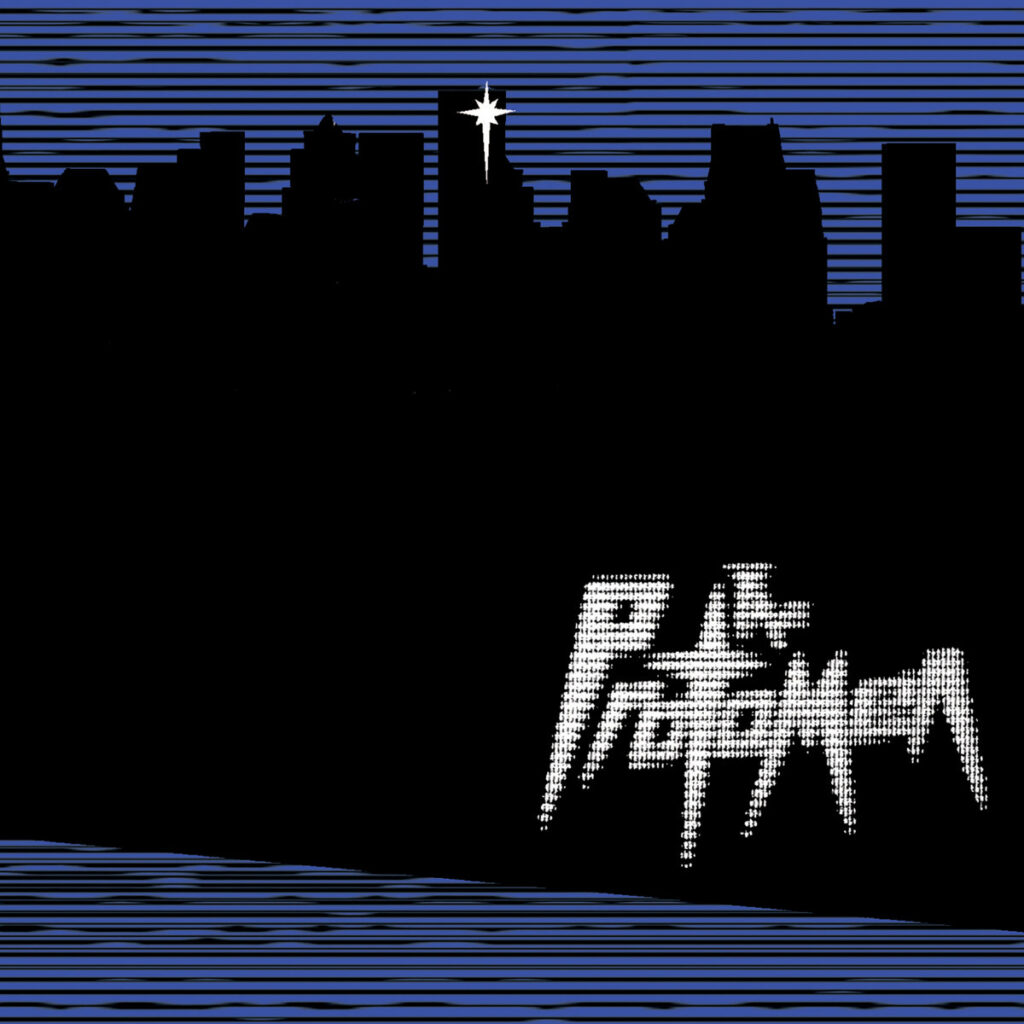
The Protomen are one of my favorite bands of all time. They’re a band centered around a rock opera they’ve been working on for 20 years now, based on the videogame series Mega Man. Each album of the story is set many years apart but the main story of the albums follows Dr. Light and his children trying to fight against the tyranny of Dr. Wily, who holds an authoritarian rule over the city with an army of robots. The first album in this series is entitled The Protomen, likely before the band even planned to continue the series into multiple albums. It follows the story of Megaman avenging his believed dead brother by trying to take down Dr. Wily on his own. In celebration of The Protomen finally releasing Act III to this story, I decided to look back on their previous story releases as the full release of the final part approaches.
The Protomen, or Act I as it will be referred to from here on out, immediately starts with a fantastic energy in its opening track “Hope Rides Alone.” It opens with quite possibly my favorite opening 30 seconds of any album ever. The narrator, only featured in this song, introduces the story with an iconic piece of opening narration.
“No one was left who could remember how it had happened,
How the world fell under darkness.
At least no one who would do anything. No one who would oppose the robots.
No one who would challenge their power.
Or so Dr. Wily believed…”
“I: Hope Rides Alone” – The Protomen
The track continues into following Protoman’s creation by Dr. Wily and setting the scene for the entire album to come. The song culminates into the moment where Protoman goes into battle with Dr. Wily’s army of robots, where the song goes all out with an energetic guitar line, a constant military-esque drum beat, and Raul Panther III (the singer of the band) screaming over it all. Eventually, Protoman is beaten by the robots and the Human Choir is introduced, along with their signature phrase, “We are the dead.” This phrase shows the album’s cynicism towards mankind, which is one of the main themes of the album, right at the start. Instead of fighting alongside Protoman, mankind just gives up, continuing to allow Wily’s rule.
The next song, split into two parts, “Funeral for a Son” and “Unrest in the House of Light,” follows the direct aftermath of “Hope Rides Alone.” Dr. Light, angry and grieving over the loss of his first son, creates Megaman. “Funeral” led by a MIDI brass track and trumpet perfectly captures the grief Light feels as he creates his second son. “Unrest” follows this up as Light, many years after “Hope Rides Alone,” tells the story of Protoman to Megaman and begs him not to follow in Protoman’s path. The song, for most of its runtime, is led by just an acoustic guitar, but occasionally breaks out in a flurry of guitars and drums that shows Megaman’s idea of the world breaking. Megaman leaves Light’s laboratory in a rush to go avenge Protoman, finally ending the first act of the first act.
“The Will of One” is where the album really kicks into gear, to me. The song, an epic rock song, has Megaman sing himself for the first time, expressing his disillusion he now has in the world. Raul’s singing really gets to shine in this song, which shows the grief, anger, and vengefulness that Megaman feels. Raul does an excellent job against all albums in his performances but “The Will of One” showcases the emotional range of his vocals the best. The song culminates in long screams of “Hope rides alone” as Megaman looks over his brother’s grave. The album also has synths enter the sound of the album, which really show the desolation of the city where The Protomen’s story takes place extremely well. The song reintroduces the Human Choir, who begin to chant along with a propaganda-spouting loud speaker. This again shows how mankind in this story is deep under the control of Wily, already speaking against Megaman.
“Vengeance,” the next song is the dedicated fight song of the album. The harsh guitars and energy of “Hope Rides Alone” returns for the entire runtime of the track. The song encapsulates the energy Megaman feels as he fights Wily’s army as the guitars roar on the track. As Megaman fights through Wily’s army of robots, the commander of the army watches over him and at the end of the song, reveals himself to be Protoman, who is still alive after the events of “Hope Rides Alone” and has defected to fight for Wily’s army.
“The Stand” is where Protoman gets the floor to shine and where the album’s main thesis becomes clear. It is largely, outside of an introduction to the song by Light, Protoman’s monologue that expresses the themes of the album. Led by a piano, Protoman explains how he can no longer fight for humanity as humanity does not fight for themselves. During his fight at the start of the album, no human helped him. He has lost hope in humanity, believing that if they want freedom from Wily’s rule, they must stand for themselves.
“They looked to me once, now, they turn to you.
Do you understand now?
Do you see that the truth is they don’t want to change this?
They don’t want a hero.
They just want a martyr, a statue to raise.”
“V: The Stand” – The Protomen
Megaman, even after Protoman’s speech, still feels hope for humanity. The next song, “The Sons of Fate,” directly puts both Protoman and Megaman’s ideologies against each other and the lives of the two. They fight with one another as Megaman tries to convince his brother to return to his side and fight with humanity. The song is as dramatic as you would hope it would be, with Megaman and Protoman singing over one another as guitars, synths, and drums rule over the instrumental. The human choir appears once again, shouting that Megaman must kill Protoman, which he ends up doing in their battle. The once chaotic music falls to just synths, which hum as an old computer might. As Protoman dies in his arms and the human choir praises him, Megaman finally understands Protoman’s view. He, like his brother before him, loses hope in humanity and leaves the battlefield, allowing for the crowd to be massacred by Wily’s army. As the crowd is slaughtered, the music fades out to wind and a lone acoustic guitar. Acoustic guitar, largely associated with Light in this album and Act II, might represent his reaction. I talked with some fans of the band before writing this review and they noted that this guitar part is usually used to lead into “Hope Rides Alone” during live shows. The album, which is about a hero being born, fighting, and then dying tragically is meant to represent the cycle of a new hero being created and humanity’s refusal to help the hero and fight for themselves.
As you might’ve picked up in reading this, Act I is quite a cynical album that does not end happily. The album, easily the most negative of Protomen’s discography (at least as of now), doesn’t hold back in showing the band’s attitudes towards humanity. No one is willing to stick up with their heroes, they just want the entertainment of a hero, the blood of a hero, someone to praise, and are punished for it at the end of the album, being killed by the army they claim to want to defeat. I see this message as way too negative as I do try to be as optimistic as I can. But even outside of the message of the album, the music of it completely rules. Led by harsh guitars and intense drums, the album can be very noisy and chaotic, some huge fans of the band can even find it too much to listen to, but I find it to perfectly fit the cynical nature of the album. The storytelling in the music is done excellently and Raul gives an incredible performance in his singing throughout the entire album. Even if you don’t read the liner notes that expand on the story while listening, it is still an extremely well put together release. The sound just excellently captures the dystopia, so much so that you should still be able to pick up on it without lyrics, and that is just something I really respect.
Overall, I feel this album is both an excellent piece of storytelling and of music. The story is engaging and interesting and the music gives the exciting energy needed to match such a dramatic story. The harsh noise might be too much for some but I feel it perfectly suits the story. However, the music does heavily change in Act II. Act II, a prequel to Act I, shows how Wily took over the city and Light’s motivations for fighting against it alongside his first attempt to take down Wily.
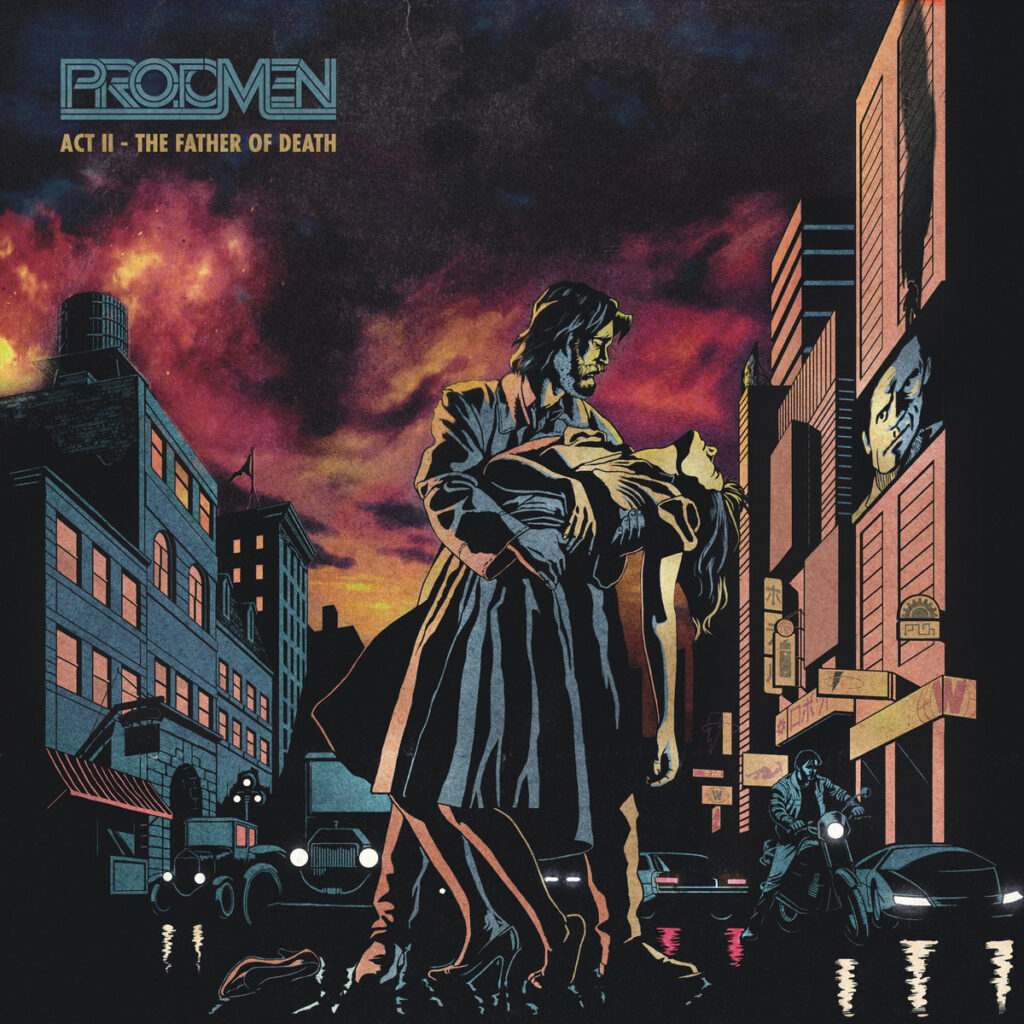
Act II: The Father of Death, set about 25 years before Act I, follows Light and Wily creating the robot army that Wily uses to rule over the city in Act I. “Intermission,” the opening track, continues the acoustic guitar from Act I’s closing. The guitar contrasts very heavily to the harsh sounds of Act I, being a calm lead-in to the new sound of Act II. It feels comforting in a way, like a calm before the storm. If you read the liner notes during your listen (which I highly recommend as a lot of story is told there that you can’t pick up from the music alone), there is a letter from Light to his wife Emily that expresses Light’s concerns over the robots he is making with Wily to replace the workers in the mines, as the mines is a very dangerous place to work. The patient guitar that plays while you read the letter matches this energy and shows how deeply Light cares for Emily in its calming sound. Wily has changed Light’s initial design to carry firearms, as well. He ends the letter stating that he will try to convince Wily to scrap the robot project entirely, leading us into the first proper track of the album, “The Good Doctor.”
“The Good Doctor” trades the acoustic for an electric, although it is still calm. Drums are also added to the song, sounding like a military drum beat. Light sings on why he built the robots, his father died working in the mines and he wished to create a solution to the countless men who have died working. A good doctor, creating a cure for tragic deaths many families had to go through in this time. Light’s insightful lyrics are contrasted by Wily’s entering into the song. Wily clearly sees this opportunity to get power in the city, saying that this is a chance to get back what they’ve earned for working on these robots. The two contrast one another in their views as they sing opposite one another. A trumpet enters the song, sounding hopeful and victorious, as if it were signaling a positive new future. Wily eventually convinces Light to turn on the robot army, with Light rationalizing it as finally taking the death away from the city. At the end of the song, Light leaves the factory to walk back to his home with Emily as Wily and one of the robots head there in a car, taking us to the next track with them.
“They’ve waited so long for this day.
Someone to take the death away.
No son would ever have to say,
My father worked into his grave.”
“The Good Doctor” – The Protomen
The next song, “Father of Death,” starts with a music box before returning to an acoustic guitar. There’s more than one playing at the same time now, and more rapidly than before, signaling the racing thoughts Light thinks over in the first half of the song. He contemplates the robots he just activated, seeing it as maybe handing a loaded gun to Wily. He decides that he has made a mistake and must make it right as the song cuts to Emily encountering Wily in Light’s apartment. Wily tries to convince Emily to run away with him and be his wife, which Emily rejects instantly, reinforcing her love for Light. Wily has the robot he arrived with kill Emily for her rejection as he escapes out of the window. In her final moments, she writes and leaves a letter for Light as he arrives. In this moment, the trumpet from “The Good Doctor” returns, revealing that it did not actually stand for hope for a positive new future, but instead for Wily’s evil. It is an excellent subversion of the usual feeling trumpets give you in movie scores, completely twisting the hope you might have to instead reveal evil. The trumpets continue into the next song, “The Hounds,” fully leading that track.
“The Hounds” is The Protomen finally writing a well and true villain song for Wily and it is exactly as good as you would hope it would be. Set as Wily prepares to start broadcasting propaganda to the city, Wily monologues on how excited he is to have the power he now has and the ability to rule over the city completely. The song’s trumpets perfectly encapsulate the joy Wily feels, being a very exciting song. The drums carry the song forward with a constant beat that makes you want to get up and feel the energy the song courses through you. Villain songs are usually a highlight in musicals or movies where they occur and “The Hounds” definitely follows in the trend. I would say it is the most exciting song of the album if not for songs in the later half, but it does give that taste of the music to come. The song closes as it is revealed in the liner notes that Light has been arrested at Emily’s grave and brought into trial for her murder.
“The State vs Thomas Light” might imply that the song is a court session, but largely is Light reflecting on Emily’s death and the guilt he feels in causing it. It’s as patient and emotive as you would hope, being led by a quiet piano and Raul’s vocals. Raul gets a chance to show off how emotive and beautiful his voice can be in this track once again. The guilt he feels over his partner’s death is sold perfectly as the piano intensifies and grows louder throughout the track. In the story, Light is ultimately found not guilty, but the crowd of the city has decided him guilty due to Wily’s propaganda, spouting that the court system would let them down as the trial commences. This sets up the next song, “Give Us The Rope,” which is the public’s reaction to Light being found not guilty. It is just an angry mob shouting that he must be hanged as Light is taken to the city’s train station by a police escort. The military drum beat of “The Good Doctor” returns here as the angry mob shouts at Light, emphasizing the public being essentially a military for Wily and his beliefs. “Give Us The Rope” largely exists just to serve the power Wily now holds over the city and how quickly he got that power. The people of the city now believe in his propaganda, wanting to kill Light for a crime he did not commit. The cynicism of Act I is shown here again, that the public is easily manipulated and does not stand for what is right, believing lies told to them.
This theme is continued into “How The World Fell Under Darkness,” a song whose story is told exclusively through the liner notes. Initially led by the train leaving the station, it tells how many years pass and the city is built up to be what it is in Act I, a large dystopian city ruled by Wily. The train sounds are traded for rhythmic boots stomping on the ground, showing Wily’s robot army having fully taken over the city. This song serves to transition the album from the country sound of the first half into the synth-led sound of the second half, symbolizing both the time passing but also the rustic life being traded for a new future where robots rule over the people. A new generation grows up in the military rule of Wily. This rule creates fear in the public, explaining why they are so scared in Act I to help out. A rumor even spreads among children and mothers that there is a beast out there that will attack and kill you if you even dare speak ill of the machines that rule over. The entire city lives in fear now, scared to speak against it all, as if they do, they are disappeared. This all leads to introducing a new protagonist of the album, one of the members of the new generation, Joe.
Joe is introduced through the next track of the album, “Breaking Out,” which is very clearly inspired by Meat Loaf’s Bat Outta Hell series. The piano and drum beat that open the song feels very reminiscent of that series specifically, capturing the youth’s need for freedom. The lyrics of the song also are about youth and youth rebellion, just like most of the songs from the Bat Outta Hell series. The lyrics, to be more specific, show Joe finally growing tired of the rule he’s been forced to live under his entire life. He decides to break out of the city, leaving it behind to finally be free for the first time in his life. The music intensifies, the drums playing harder, an electric guitar begins raging, synths enter as well as a digital drum set. The energy of youth and its longing for freedom is perfectly captured in this song. Joe takes his father’s motorcycle and drives out of the city into the outskirts where Light went as the city fell under darkness. The song also perfectly captures the feeling of driving fast during the nighttime and is easily one of my favorites to play while I do so myself. As Joe exits the city, the human choir from Act I returns as well, urging Joe to not “turn his back on the city.” He ignores them as he escapes from the larger public, setting himself free from that society and solidifying the rebel youth theme of the song. As Joe arrives in the abandoned outskirts of town, Light finds him at the same time as one of Wily’s robots does, the beast referenced in “How The City Fell Under Darkness.”
“This city doesn’t know what’s coming, she doesn’t feel the heat.
This city won’t know what hit her, what knocked her out into the streets.
This city’s thinking that it’s over and she’s already fast asleep.
So, I’m breaking out of here tonight.”
“Breaking Out” – The Protomen
The next song, “Keep Quiet,” serves as the album’s fight song in the same way that “Vengeance” did. Joe faces off against one of Wily’s robots and emphasizes that he is no longer scared of Wily’s army and no longer under its control. He’s taking a stand here to be free and stand up for himself. The song is led by synths and intense drumming, really selling the anxiety Joe feels as he prepares to face what he has feared his entire life. The human choir returns to sing with Joe about how the city has been dead for years now. Joe still does not sing with the choir exactly, however. His lines come a few seconds before or after the choir sings them, showing he still does not fit in line with the public of the city. Notably, the choir at one point sings “Keep quiet,” which Joe does not, showing he is not going to keep quiet in his beliefs any longer, especially after he spends all of “Breaking Out,” screaming how he feels from his motorcycle. As the song fully gets into the fight between Joe and the robot, a robotic voice takes over for the choir, almost as if the robot is taunting Joe during their fight. Joe ultimately wins the fight, beating the robot. Light comes in as the robot lays on the floor, injured from its fight, and deals the final blow to it. Light then takes Joe into his hideout and they begin planning a way to take down Wily together.
“Light Up The Night” is the song I meant earlier when there were more exciting songs than “The Hounds.” The song has Joe and Light prepare a plan to blow up the signal tower that sends out Wily’s propaganda around the city. The song, led by a constant drum beat and bass that keeps the energy going as synths and guitars are added into the mix, is pure excitement. You can feel how big this is for Joe and Wily, both preparing to take back the city they feel has been lost. The piano that led “Breaking Out” even returns in the chorus, keeping it as a representative of Joe in this album. The song just further emphasizes the themes of youth rebellion that the second half of this album is all about. The song is probably the least complex story-wise of the whole album but it legitimately is just a very great and fun song, so what else do you really need from it? This is the song I tell people to listen to to get into The Protomen because if you don’t feel something listening to this song, I worry something is wrong with you. The exciting energy is kept up in the following song, “The Fall.”
“The Fall” is an almost entirely instrumental track, backed by a looping synth and manic drums. A hopeful guitar leads the song as a choir, notably not marked as the human choir in the liner notes, tells Joe to climb as he races up the signal tower to plant the explosive to take it down. The song fills you with hope with the almost angelic choir, the epic guitar, and the drums get you hyped up. The song eventually subverts the hope you feel once again, as revealed in the liner notes, that as soon as Joe plants the explosive at the top of the tower, an explosion planned by Wily goes off, sending Joe flying off the building. The drums and guitar stop in the track as this happens, leaving only the synths which soon stop the looping, leaving just a single note that plays out until the end of the song as a hospital heart monitor beeps until eventually flatlining. The hope you might’ve once had is completely gone as Joe’s corpse slams into the ground, right as Light arrives at the tower.
“Here Comes The Arm” is the final track of the album. It starts with just synths that capture the despair both the listener and Light is feeling in the moment. It’s slow, sad, and mournful of both Joe and the city that you have once again lost hope for. Listeners know from Act I that this story does not end well, but nonetheless, the failure hits hard. “Light Up The Night” and “The Fall” perfectly fill you with hope, making you forget how awful it is in Act I, just to rip it away. Light expresses his guilt over how the entire story of Act II has gone, feeling guilt for Emily’s death again but now Joe’s as well. As the building above him begins to crumble from the explosion, he resigns himself to die beneath it. In his final moments, he pulls out the letter Emily left for him as she died in “Father of Death.” It tells Light that he must move past her death, that the darkness that holds over the city currently will pass, and that the city needs him. This goes against what you might expect from The Protomen, considering Act I, as this is largely an optimistic letter for the album to end on. It even motivates Light to get up and continue his fight, leading directly into the events of Act I. As “Here Comes The Arm” ends, the synths fade out of the track, instead harsh electric guitars take over alongside drums played as dramatically as you could imagine. The guitars grow harsher and more distorted, calling back to the sound of Act I, leading directly into it audio wise just as the story did, ending the album as Light sets off to create Protoman.
Act II is one I definitely consider a masterpiece. Every track is so thoughtfully written, both lyrically and musically. The switch from country into an 80s action movie soundtrack is done way better than you could possibly imagine and it all works coherently as an album and a story. As with the first act, the album is engaging in its story, even if it is less flashy and action heavy. But the dramatic beats of the story work extremely well and the music sells the emotions the characters feel excellently, especially with the songs that feature Joe. This album is one that has stuck with me for four years now and I imagine due to its perfection, it will stick with me for many more years after this.
The Protomen have created an excellent story with these two albums. The story is told excellently with music that is just as exciting as the action unfolding before you. Act I is a perfect representation of a dystopian state that rules over its people and Act II is a perfect telling of how that fascist rule came into power and the first attempts to defeat it, with excellent music throughout both albums. Now is an excellent time to get into this band as in a few short weeks as of this writing, Act III will be out. Act II released in 2009, meaning it has been 16 years since the last part in this story. From what has been released of it currently, the album perfectly follows up on the epic and exciting sound of the second half of Act II. I’ll write a full review of the album when it releases (with its liner notes) next year. I am incredibly excited to see how the story turns out. But until then, I will still be jamming out to the excellent songs The Protomen have made in the first two parts of this story.
The Protomen (Act I)
Fav Tracks: Hope Rides Alone, The Will of One, The Stand
Final Score: 8/10
Act II: The Father of Death
Fav Tracks: The Good Doctor, Breaking Out, Light Up The Night